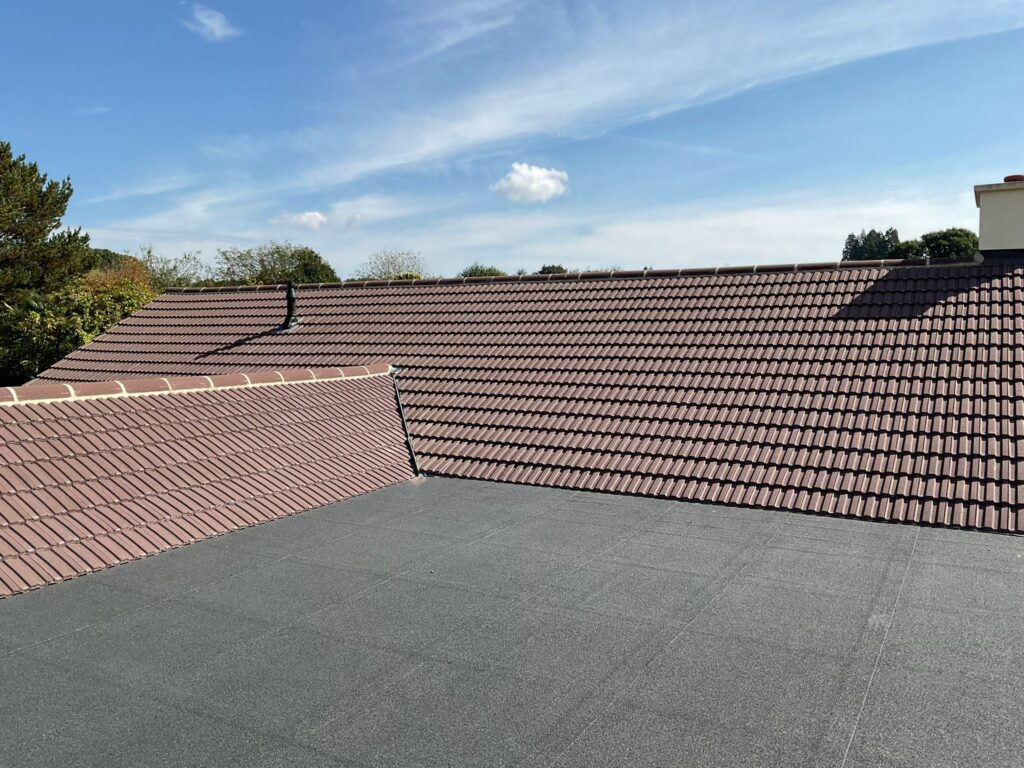
Not every roof defect requires extensive replacement. When damage is confined to a clearly defined area and the surrounding roof remains serviceable, a targeted repair can restore protection while preserving materials that continue to perform effectively.
The success of this approach depends on accurate diagnosis. A professional roofer must establish why the defect occurred, how far it extends beneath the visible surface and whether the new work can connect reliably with the existing roof.
How Localised Repairs Protect the Wider Roofing System
Stopping Water Before It Spreads
A cracked tile, failed flashing or damaged section of underlay may initially affect only a small area. If water continues to enter, however, it can travel along battens, rafters and insulation before appearing inside the property.
A timely repair closes the entry point before moisture reaches adjoining materials. This can help protect:
- Roof battens
- Structural timbers
- Underlay
- Insulation
- Ceilings and plasterwork
- Nearby tiles or slates
- Internal decorative finishes
The location of an internal damp mark does not always reveal where water entered, so tracing the leak is an important part of the repair.
Retaining Sound Tiles and Slates
Where most of the roof covering remains secure and serviceable, removing it unnecessarily may provide little practical benefit. A targeted repair allows damaged or displaced materials to be replaced while retaining the surrounding tiles or slates.
This approach is most suitable when deterioration is genuinely localised. The neighbouring covering should be checked for cracking, movement and weakened fixings before it is judged fit to remain.
Protecting the Underlay and Battens
Tiles and slates form the roof’s primary covering, but the layers beneath them also contribute to its performance. A small opening can expose the underlay to direct rainfall and allow moisture to reach timber battens.
During a localised repair, the affected covering can be lifted carefully so that hidden materials are examined. Torn underlay, decayed battens or failed fixings can then be renewed within the repair area rather than being covered over.
Preventing Movement from Affecting Nearby Materials
One slipped tile can disturb the alignment of adjacent coverings or leave their edges exposed to wind. Loose ridge, hip or verge materials may also place additional pressure on neighbouring sections.
Securing the original defect helps prevent this movement from spreading. Correct positioning and fixing are essential because a repair that relies only on surface sealant may not restore proper support.
Restoring Vulnerable Roof Junctions
Many localised leaks originate around chimneys, valleys, rooflights, wall abutments and transitions between different roof types. These areas require materials to overlap and connect correctly while directing water away from gaps.
A targeted repair may involve renewing flashing, repairing a valley, replacing damaged mortar or rebuilding a small junction. The detail should be treated as a complete water-shedding arrangement rather than patching only the most visible crack.
Avoiding Repeated Temporary Patching
A surface patch may briefly conceal a defect without resolving why it developed. If water is entering behind the repair or the supporting materials continue to move, the problem is likely to return.
A professional targeted repair should address:
- The original point of failure
- The depth of the damage
- The condition of surrounding materials
- The route taken by water
- The connection between new and existing work
- Drainage across the repaired area
This gives the repair a clear purpose and helps preserve the roof beyond the immediately affected section.
Keeping a Small Problem Localised
Roof deterioration can become progressively harder to contain. Water entering through one defect may weaken battens, saturate insulation or contribute to decay in nearby timber.
Acting while damage remains limited gives the best opportunity to preserve the rest of the roof. Delaying work until several components have deteriorated may make a broader repair necessary.
When Is a Targeted Repair Appropriate?
A localised repair may be suitable when:
- Only a small number of tiles or slates are damaged
- Flashing has failed around one junction
- A limited section of underlay or battens is affected
- Ridge or verge deterioration is confined to one area
- A flat roof has an isolated defect
- The surrounding covering remains stable
- The cause can be identified and corrected
The roof’s age alone does not determine whether repair is worthwhile. Its overall condition, construction and maintenance history provide more useful evidence.
When Might Wider Work Be Needed?
A targeted repair may not provide a dependable result when deterioration is present across several roof slopes or components. Warning signs include:
- Repeated leaks in different locations
- Widespread tile or slate failure
- Extensive deterioration of underlay or battens
- Numerous temporary repairs
- Significant roofline movement
- Large areas of defective mortar or flashing
- Local materials too fragile to connect with new work
In these circumstances, repairing one visible defect could leave other vulnerable areas unresolved. A professional assessment should distinguish between an isolated problem and wider roofing failure.
Why Accurate Diagnosis Matters
Water can move beneath the covering before it becomes visible, which means the obvious internal symptom may not sit below the damaged component. Repairing the wrong area can leave the original route of entry open.
A thorough inspection should consider the external covering, roof junctions, drainage details and accessible parts of the roof space. This evidence allows the repair area to be defined accurately and avoids unnecessary disturbance elsewhere.
Conclusion
A targeted roof repair can preserve the wider roof by stopping water ingress, renewing damaged supporting materials and preventing local movement from spreading. It offers an effective solution when the defect is clearly identified and the surrounding roofing system remains dependable.
LJ Roofing Chippenham provides professional roof inspections and targeted repairs in Chippenham, Wiltshire. If you have noticed a localised leak, displaced covering or damaged roof detail, contact our team to arrange an assessment and determine the most appropriate repair.
Call us on: 01249 471 291
Click here to find out more about LJ Roofing Chippenham
Click here to complete our contact form and see how we can help with your roofing needs.